Pause the Screens, Play the Mind
In the age of constant pings and glowing rectangles, hitting pause on screen time has never been more necessary—or more rewarding. Fun brain teasers for kids to spark clever thinking at home offer a refreshing and powerful alternative. These playful yet purposeful puzzles aren’t just a way to pass the time—they activate memory, sharpen logic, and build resilience. A child engaged with a good riddle doesn’t even realize they’re exercising their brain; they’re simply having fun. And yes, all of this happens without a single swipe or scroll.
This post brings together ten imaginative, curiosity-piquing brain teasers designed for kids aged 6–12. Some will make them giggle, others might leave them wonderfully stumped—and all of them open the door to critical thinking, creativity, and family bonding. Let’s dive into the world of educational puzzles for children that turn your living room into a dynamic learning zone.
1. The Sneaky Sock Drawer Mystery
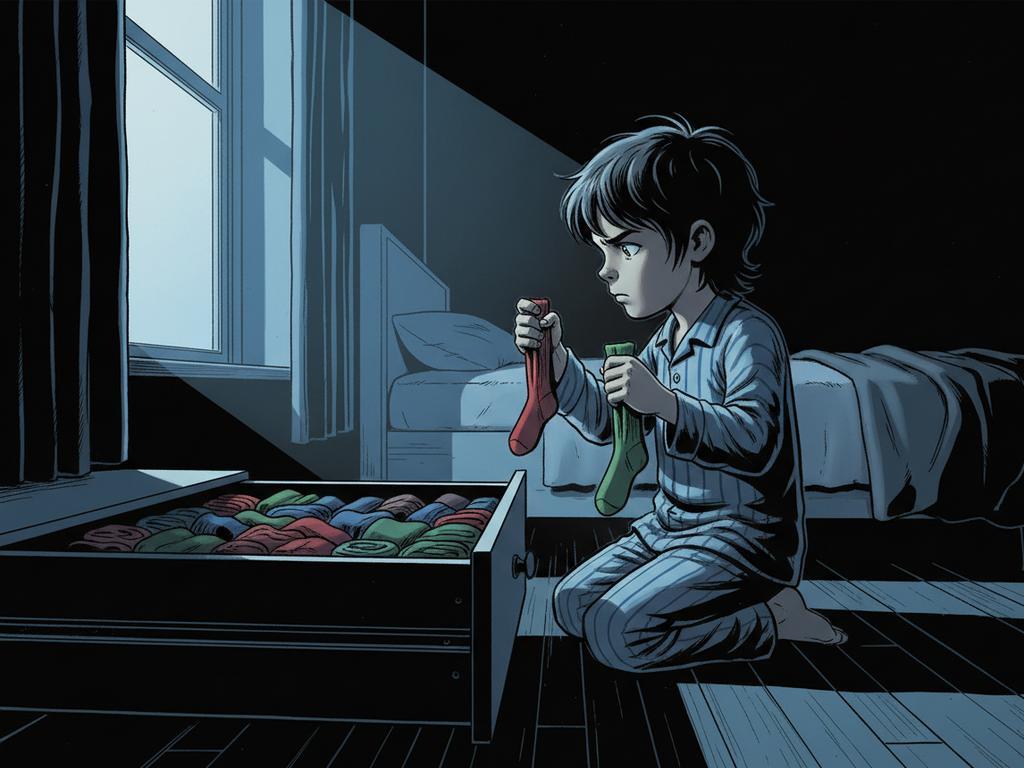
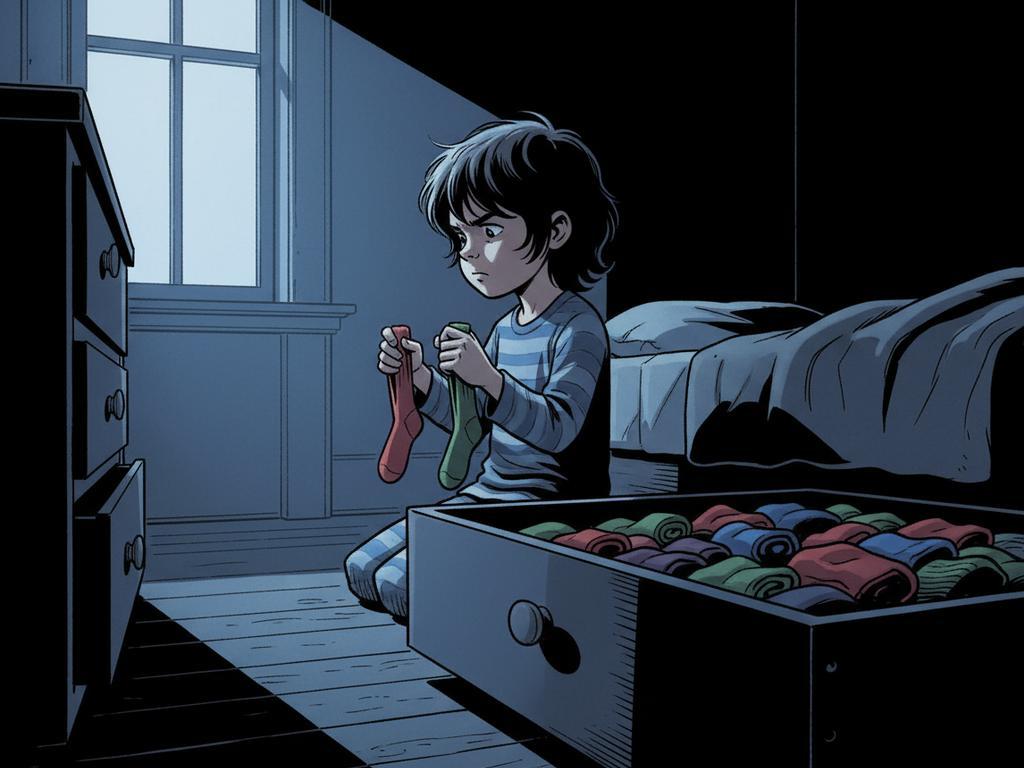
Imagine this: You’ve got a drawer full of 10 red socks, 10 blue socks, and 10 green socks, all mixed together. The room is pitch dark. What’s the minimum number of socks your child must pull out to guarantee a matching pair?
This puzzle teaches logical deduction and probability thinking. The minimum is *4 socks*. Why? Even if the first three are all different, the fourth will necessarily match one. It’s a simple situation wrapped in a real-world context—a perfect combination for early problem solvers.
2. The Tricky Toothpick Triangle
Give your child 9 toothpicks and tell them to build 3 equilateral triangles. The catch? They can’t break or overlap the sticks—and they need to use all of them.
At first, it seems impossible. But wait! Creative thinking activities for kids often require a shift in perspective. The trick here is to think *in 3D*. By assembling the toothpicks into a pyramid (a tetrahedron), they get three visible triangles—with none of the constraints actually broken. Surprise and delight await as they *literally think outside the box*.
3. The Missing Dollar Conundrum
Three friends buy a gift for $30. They each chip in $10. Later, the clerk realizes the item is on sale for $25 and gives back $5. They each get $1 and give $2 as a tip. But hold on—each paid $9 (that’s $27), plus $2 tip equals $29. Where’s the missing dollar?
Classic and baffling, this puzzle invites analytical reasoning and pattern recognition. The trick lies in how the situation is phrased—the actual math doesn’t support linking the tip and the remaining total in the way described. It’s not about calculation, but about understanding structure. And that’s a valuable mental muscle to flex.
4. A Maze of Words: The Rebus Round
Show your child these words: “JOBINJOB”—ask what phrase it represents. Clue: It’s hidden *in plain sight*.
This is a rebus—a visual puzzle that represents a phrase through clever arrangement. The answer? “A job in a job.” Maybe a metaphor for all of parenting! These riddles are mini brain gyms, ideal for linguistic creativity and lateral thinking. And you can make them up with pen and paper at the kitchen table—screen-free fun at its finest.
5. The ‘Who Ate the Cookie?’ Logic Grid
“Liam says he didn’t eat it. Mia says Liam did. Zoe says she didn’t. Only one of them is telling the truth—who ate the cookie?”
This is a classic logic riddle for kids at home. You’ll watch their eyes squint, minds turn, and eventually—hopefully—light up with the answer: Mia did it. Working through statements and contradictions strengthens deductive skills and fosters disciplined reasoning—traits that help long beyond the puzzle itself.
6. The Mirror Image Challenge
Give your child a sheet with various shapes, letters, or patterns. Ask them to draw (or identify) the mirror image of each. To level it up, throw in symmetry, rotations, or flipped words.
Mind games for children aged 6–12 like this one promote spatial awareness and visual memory. They’re particularly great for visual learners and help with early geometry skills, handwriting, and even coding readiness later on. Bonus? All you need is paper and pen.
7. Decoding the Alien Message
Create a ‘secret alien language’ using symbols or numbers to represent letters. Give kids a key and a coded message like: 🔺🔹⬤=FUN. Let the decryption begin.
This activity taps into pattern recognition and memory. It gives a sense of adventure while training the brain for sequencing and symbolic thinking. It’s story-meets-code—ideal for kids fascinated by secret agents, space travel, or ancient scripts!
8. The Wobbly Tower Dilemma
Stack 10 plastic cups. Ask your child: “If you remove every second cup from the stack, starting at the second position, how many remain?”
What makes this a critical thinking brain challenge for kids is that it combines prediction, visualization, and operational thinking. Children imagine rather than test—strengthening their ability to hypothesize and strategize. Spoiler: Four cups remain, but it’s the process of reaching that number that counts most.
9. Just Add a Line!
Write a basic math equation on a piece of paper, such as: 9 + 5 = 2. Ask your child to make the equation correct by adding *just one line*.
This one plays with perception and flexibility. Turn the plus sign into a 4 and make it 9 – 5 = 4? Or adjust numbers themselves? It’s not about math mastery, but about seeing beyond the obvious. Such puzzles nurture mental agility and outside-the-box thinking.
10. Build Your Own Puzzle – And Share It
Flip the script: Challenge your child to invent a brain teaser of their own. Maybe it’s a riddle, a maze, or a logic game. Then have them test it on you—or a sibling.
Creating puzzles taps into multiple cognitive domains: foresight, logic, creativity, and even empathy (can others understand it?). It flips passive learning into active construction of knowledge—one of the most powerful ways to internalize skills and feel capable. Plus, it’s wildly satisfying.
Home Is Where the Mind Plays
From sock drawers to pyramid designs, creative thinking activities for kids don’t require apps, subscriptions or batteries—just curiosity. These puzzles transform everyday moments into doorways for reflection and reasoning. Over time, your child won’t just grow smarter—they’ll grow more confident, more patient, and more eager to take on life’s many questions.
So the next time boredom strikes, don’t reach for the remote. Reach for a riddle.